Key Highlights
- Discovery:The James Webb Space Telescope detects light from the trihydrogen cation (H₃⁺).
- Historical Context:This finding confirms a prediction made by astrophysicists in 1986.
- Significance:The trihydrogen cation is crucial for understanding interstellar chemistry and the origins of life.
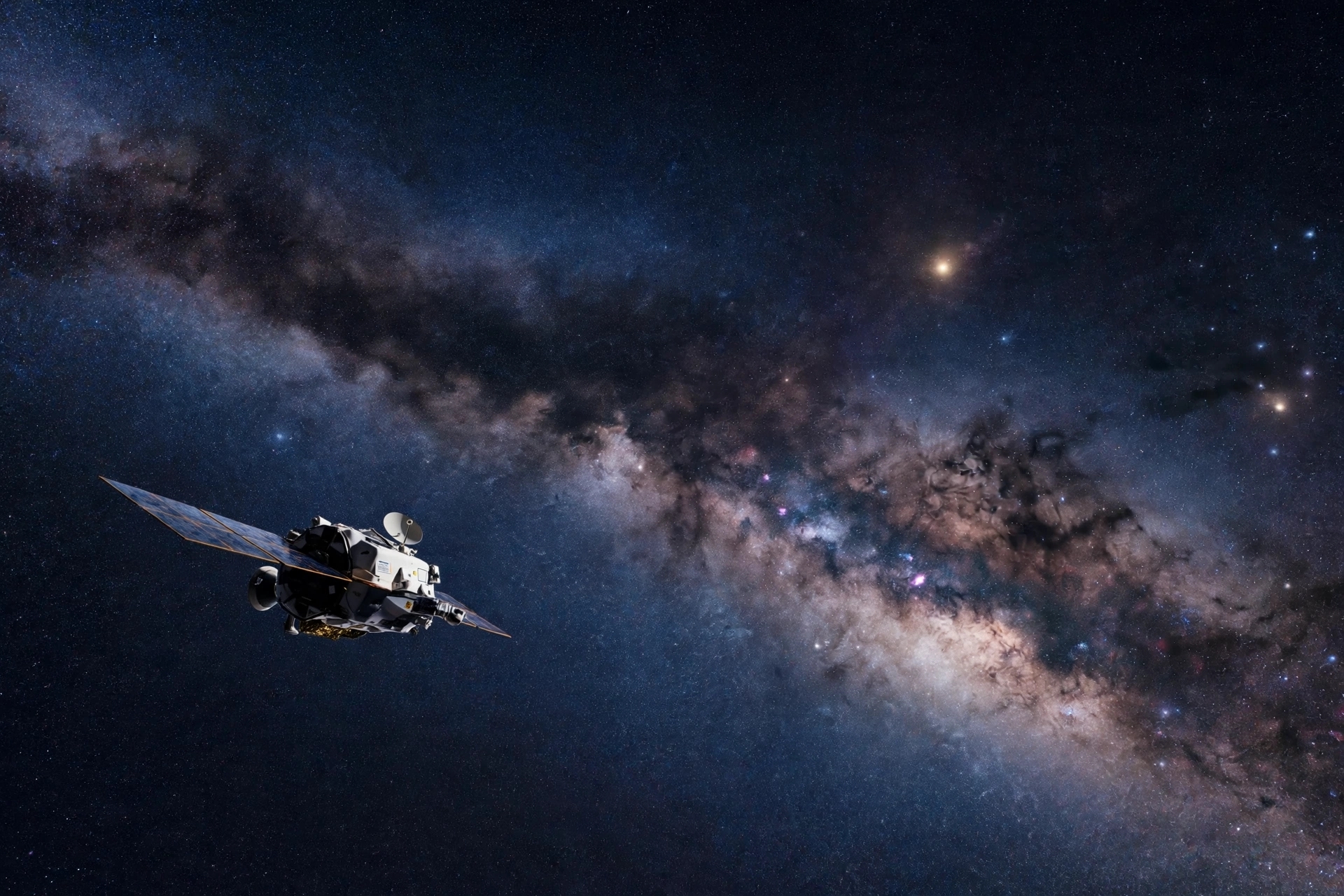
In a remarkable breakthrough, the James Webb Space Telescope (JWST) has detected the elusive light emitted by the trihydrogen cation (H₃⁺), a molecule long theorized to exist but never observed until now. This discovery not only validates a prediction made by astrophysicists Fu-Shih Pan and Takeshi Oka in 1986 but also opens new avenues for understanding the complex chemistry of the universe. For over four decades, the existence of this faint light remained unconfirmed, as no laboratory or telescope could detect it, leaving scientists in a state of anticipation.
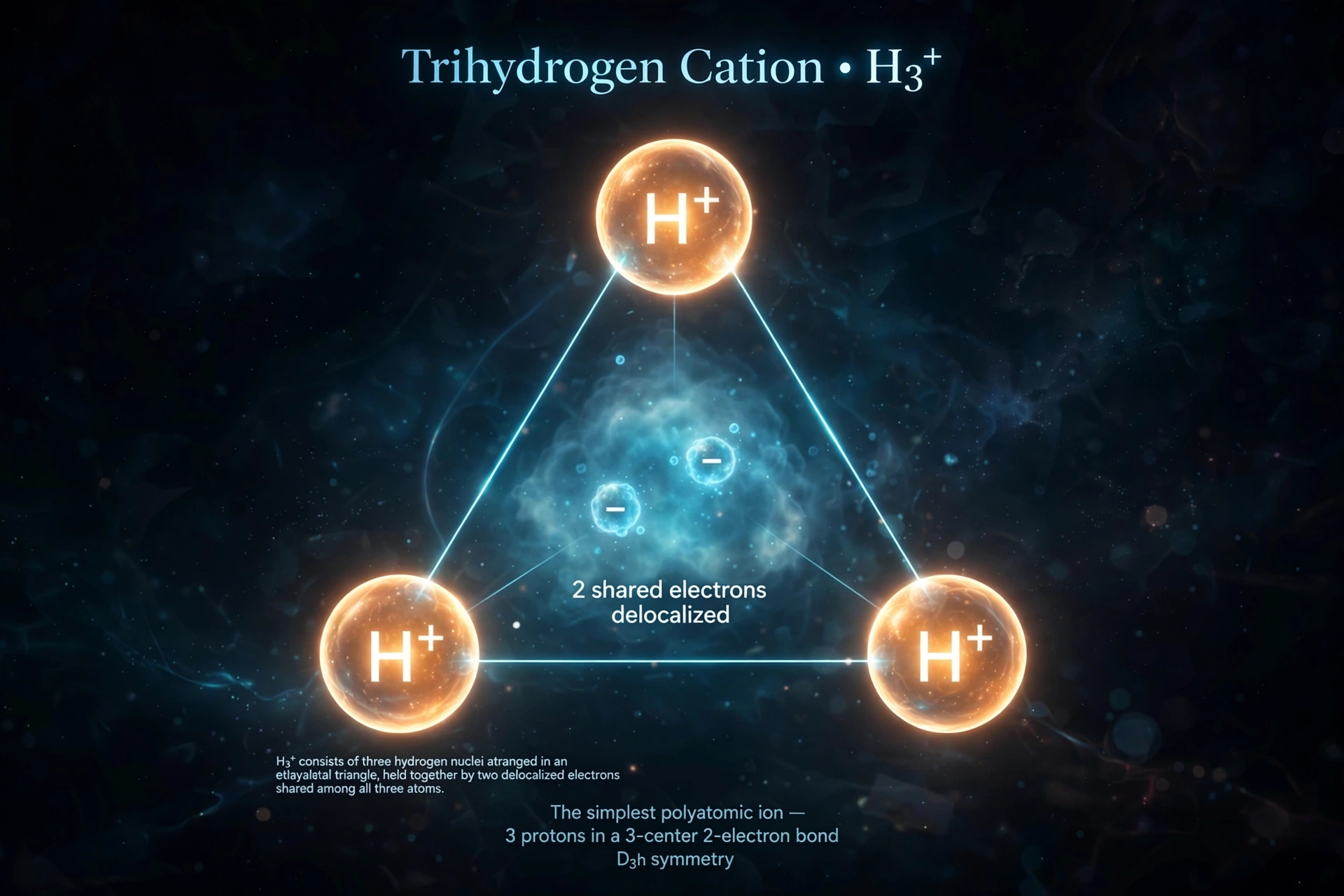
The trihydrogen cation is a simple yet significant molecule, consisting of three hydrogen nuclei sharing two electrons in a perfectly symmetrical equilateral triangle. This symmetry is what makes H₃⁺ so important in the realm of molecular physics, as it lacks a permanent dipole moment, which typically allows molecules to emit radiation. As a result, it was deemed 'too symmetrical to speak.' However, Pan and Oka discovered that as the molecule rotates, centrifugal forces can distort this symmetry just enough to create a slight electric imbalance, enabling it to emit radiation, albeit at an extraordinarily weak level.
The detection of this forbidden light was made possible by the JWST's advanced infrared sensitivity, combined with the extreme conditions present in a stellar nursery known as Herbig-Haro 168. In this region, jets from a newborn star collide with surrounding gas at incredible speeds, generating shock waves that heat the material to thousands of degrees. Amidst the chaotic infrared emissions, the JWST identified twenty-six distinct spectral lines corresponding to the predicted emissions of H₃⁺, with the strongest signal registering at an impressive 72 sigma, indicating a high level of statistical confidence in the finding.
This groundbreaking discovery was not an isolated event. Upon reviewing archival data from the JWST, the research team, led by David Neufeld of Johns Hopkins University, found similar emissions in another Herbig-Haro object, HH 211. This suggests that the production of this forbidden light is relatively common in the turbulent environments where stars are born, providing valuable insights into the chemical processes that underpin the formation of the cosmos.
Despite the excitement surrounding the detection, researchers acknowledge that current models do not fully explain why the trihydrogen emission was so pronounced in these conditions. Nevertheless, this finding represents a significant advancement in our understanding of the temperature, density, and ionization of gas in regions that are otherwise inaccessible to observation.
The emotional weight of this confirmation is profound. Pan and Oka's original calculations were made with the limited tools available in their time, relying solely on theoretical frameworks. Takeshi Oka, in particular, has dedicated much of his career to studying H₃⁺, observing its vibrational patterns but never its rotational dynamics. The long wait for validation underscores the patience required in scientific inquiry, where the universe often takes its time to reveal its secrets. With the JWST acting as a precise listener, the universe has finally spoken, delivering a message that aligns perfectly with the predictions made decades ago.
The images in this article are AI-generated illustrations and are not actual astronomical photographs.
Published by Banx Network. This article is part of the Banx decentralized media programme, powered by the BXE token on the XRP Ledger.